Srirama Institute of
Shadow Theatre
Shadow Theatre
Preserving the Heritage Shadow Theater of Odisha
Scholars and traditional artistes suggest four key opinions behind this unique title:
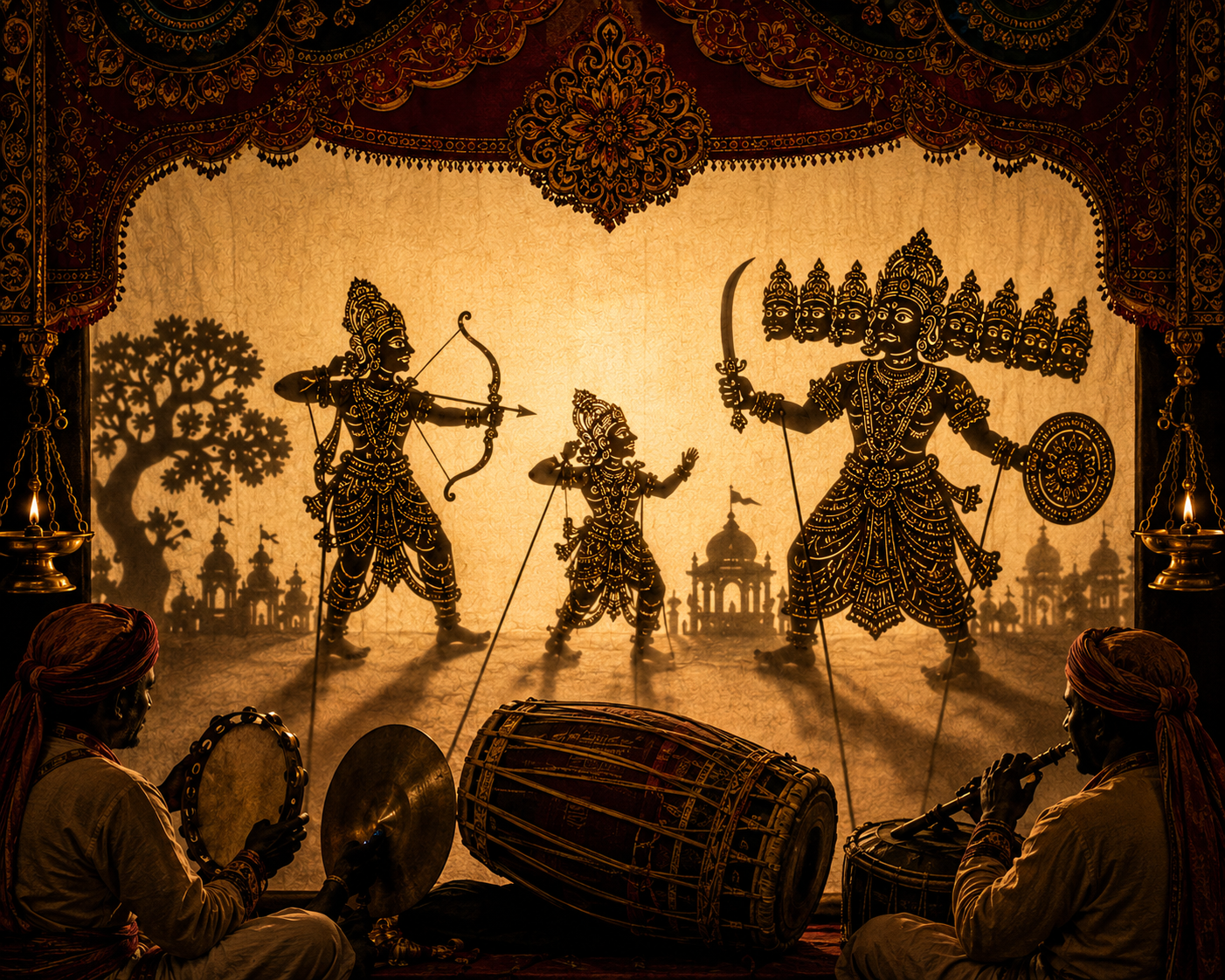
The hero and central shadow focus of this play is not Lord Rama, but Ravana, the mighty king whose dramatic shadow silhouette defines the performance[cite: 1].
Lord Rama is conceived as 'Parambrahma', a bodiless divine entity that is shadowless[cite: 1]. Therefore, using "Rama Chhaya" would be philosophically improper[cite: 1].
On request of her sakhis, Sita once drew Ravana's figure[cite: 1]. She confessed seeing Ravana's shadow in the ocean waters during abduction in the Pushpaka Viman[cite: 1].
Since 'shadow' symbolizes illusion, deceit, and falsehood, applying it directly to Purusottam Lord Rama is avoided, hence "Ravana Chhaya" is used[cite: 1].